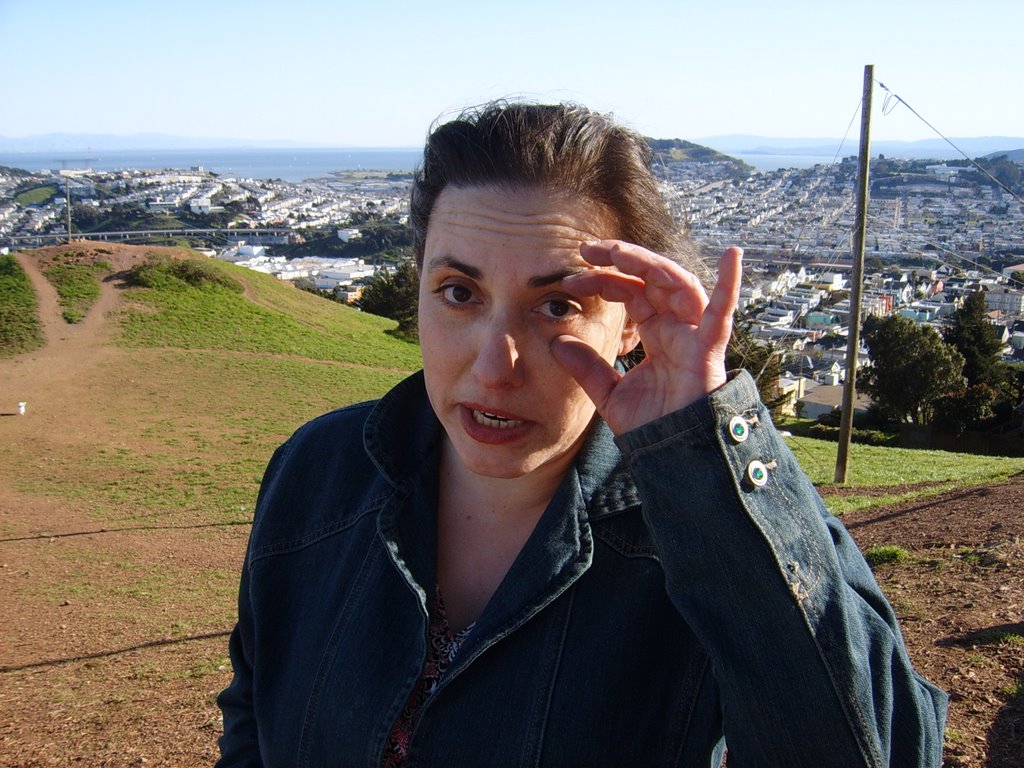
Known as "Santeria" in Cuba and as “Candomble” in Brazil. The Orishas are considered Santos “saints” responsible for different parts of life with different attributes and myths attached.Three freed female slaves in Bahia Salvador, Brazil began worshipping the forbidden African religion by merging Orishas with Catholic Saints until they were allowed to worship freely. Slaves in America were criminalized for practicing their religion. It is said that is why Brazil got the Samba and the America got the Blues…
Changó’s favorite wife, she left his brother, the blacksmith Ogun, after he tried to force her to work in his forge, but not before stealing his tools (customarily seen as adornments for her crown). She fights next to Changó in war, and she guards the gates to the cemetery as well as to the marketplace; she is the hurricane that destroys in order to create. Her relationship to the ancestors is indexed by the use of rainbow colors in the clothing of her initiates and in altar displays.
There is a difference between making an icon, and having it become the object of worship, and making a representation that expresses a truth about God. We cannot depict the Father, the Holy Spirit, or the Trinity. .Herein lies the contradiction of faith, invisible and boundless, yet evidenced through our very real humanity. I became a santera: a saint maker; interpreting the holy moments of each day through a Child's eye.I'm fascinated by the Trinity as a metaphor for aspects of ourselves- If we reveal our spiritual nature when we release our sense of separateness from one another, then it is inevitable that in each new work, the figures grew increasing similar and androgynous.
The Yoruba believe that each person has a Guardian Spirit called an "Orisha". Orisha are aspects of the Supreme Being that are manifested as forces of nature. When Yoruba slaves were brought to the New World they brought their beliefs with them. This belief system is known as "Santeria" in Cuba and as “Candomble” in Brazil. The Orishas are considered Santos “saints” responsible for different parts of life with different attributes and myths attached.
Three freed female slaves in Bahia Salvador, Brazil began worshipping the forbidden African religion by merging Orishas with Catholic Saints until they were allowed to worship freely. Slaves in America were criminalized for practicing their religion. It is said that is why Brazil got the Samba and America got the Blues…
By Nicolaus Mills reference material for the floating city series
.Polidori’s New Orleans is an after-the-flood disaster of biblical proportions that continually challenges our sense of how the world is supposed to look.
Cars stand upside down, their rear bumpers leaning against the gutter of a roof. Uprooted trees rest on houses that seem as if they were built from a plywood kit. Polidori’s post-flood New Orleans is a collage of random disorder. Nothing is where it should be. Most revealing are the domestic interiors Polidori has so carefully photographed. In “6328 North Miro Street,” a four-poster bed filled with mud looks as if it had been covered in fudge. In “North Robertson Street,” the steel blades of a ceiling fan droop like the withered petals of a flower. In “Tupelo Street,” a rack of clothes hangs neatly in a closet despite the fact that the room the clothes are in is missing its exterior wall. In “1401 Pressberg Street,” living room furniture appears as if it had been rearranged by an angry giant, while on an undamaged coffee table, a new telephone sits pristinely in its box.
in Polidori’s “New Orleans After the Flood,” we cannot make sense of anything that happened. In removing people from his photographs, in labeling houses by their street number rather than by their owners’ names, Polidori has made it clear that in his judgment Hurricane Katrina was all-powerful once it struck land. Everyone in its path was temporarily rendered anonymous.
This coerced anonymity has not prevented Polidori from emphasizing how hard Katrina was on the poor. In the interiors that he photographed, Polidori is not embarrassed to point out that so many New Orleans residents caught in the flood never owned very much in the first place. The litter that Polidori’s camera has captured is dominated by close-ups of old television sets, mismatched couches, beaten-up tables and chairs—furniture that was disposable long before it was ruined.
There is also a politics of empathy . He puts us inside the homes that the victims of Hurricane Katrina no longer occupy, leaving what should be done next to our imaginations. His bet is that we will see, as he has, that no family subjected to such trauma can be expected to restart its life without first getting the kind of help that government alone can provide for coping with disaster on this scale.
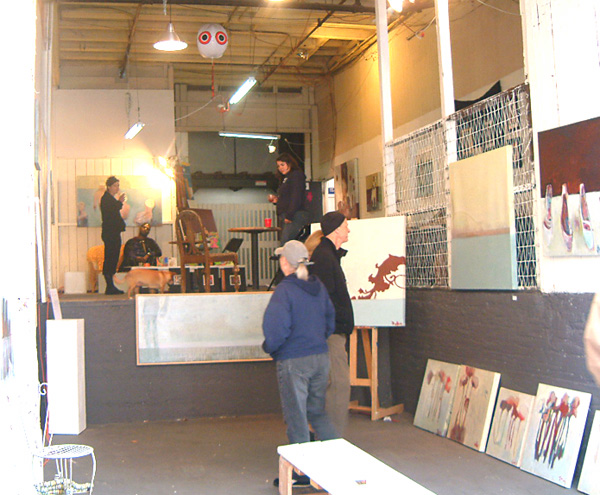
My annual half off sale was a huge success! I felt really good about being able to offer my collectors this opportunity as a way of saying thanks. The loading dock at the studio was open to the street making it a monthly
loading dock gallery."
Recently returning to my figurative work in a series of large bathhouse paintings . "Bathhouse" is 40" x 60 " "Spa Day" is 24 x 24 and has the immeadiate gestural raw quality I strive for.


 detail "Mother of Saint"
 oxum admiring her reflection 30 x 30 oil 09
 erosion


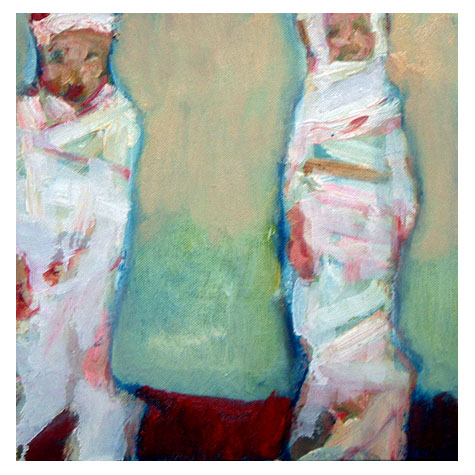
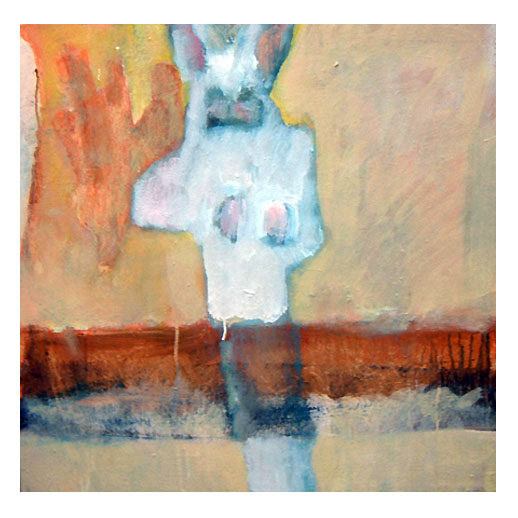
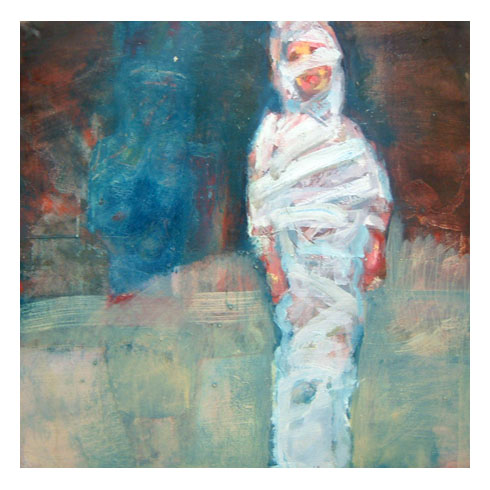




 water damages....
![[image]](https://lh3.googleusercontent.com/blogger_img_proxy/AEn0k_tPzORHiq78j-SDTSO5iKXSK8KrULju3kwwJx7Wluap0Xi5crXpL6oylRy5Hx_Ba92zJ4edMuNE8mCEYlyqqaHtWrQxzG5R_iZS_eDLBlkQfnXqYgfAiDdsXckZBotyKGUz_gwQfqm8CcgdbrD0i-is1g=s0-d)